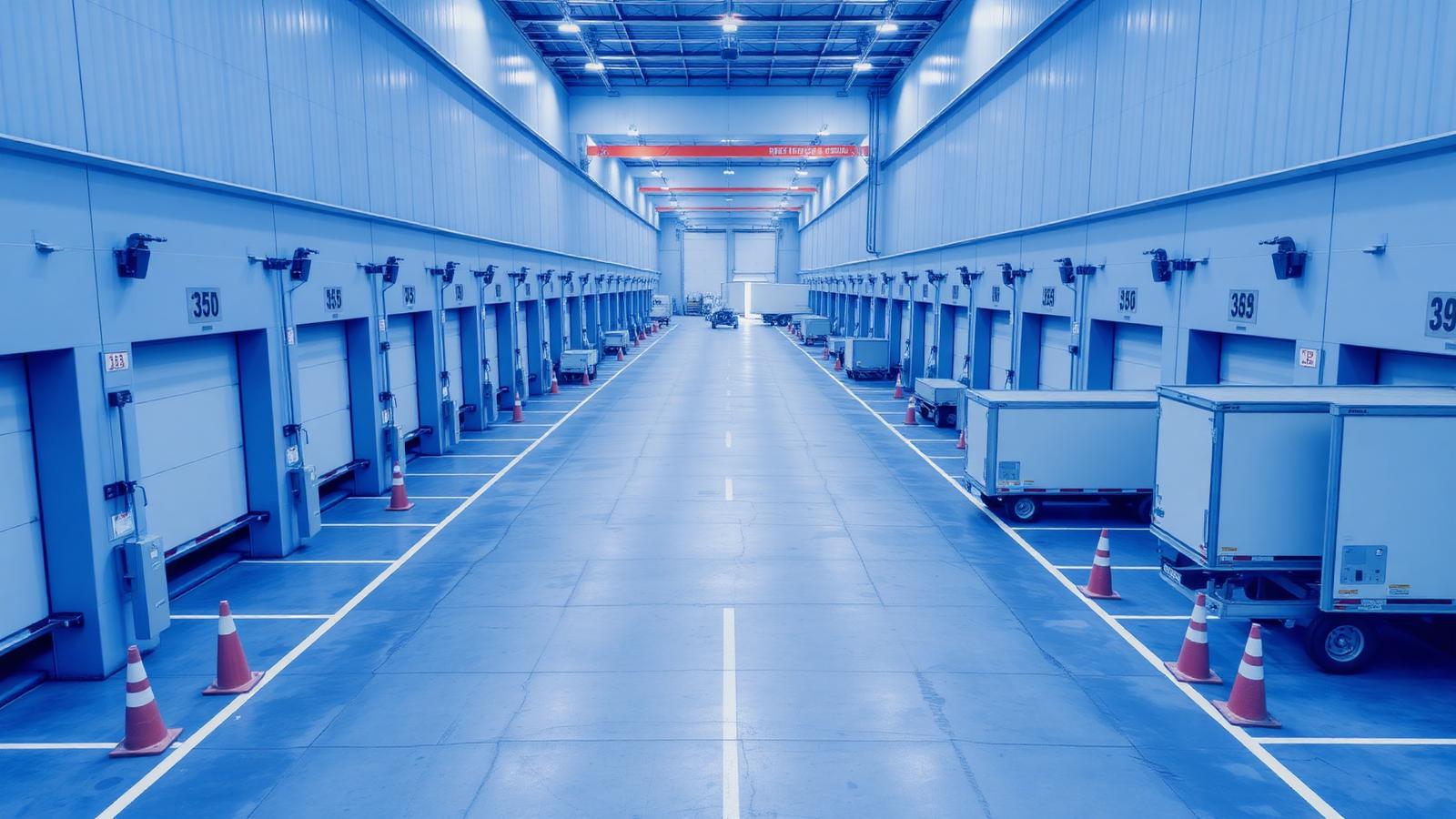

Detention charges feel arbitrary when they land on the invoice, but they are almost never random. They are the predictable output of a dock that cannot see itself. Here is where the charges actually come from and how objective data ends the arguments.
How detention works
Most carrier contracts grant a period of free time at the dock, typically two hours for a live load or unload. Beyond that, detention accrues, usually per hour or per fraction of an hour, at rates that commonly range from 50 to 100 US dollars per hour, with higher rates for specialised equipment.
| Term | Typical value | Notes |
|---|---|---|
| Free time | 2 hours | Starts at arrival or at scheduled appointment, depending on contract |
| Detention rate | $50–$100 / hour | Often billed in 15 or 30 minute increments after the first hour |
| Daily cap | $300–$500 | Not all contracts include one |
| Claim window | 30–90 days | Disputes usually require your own timestamps to succeed |
The five real causes
- Appointment schedules built on fiction. Slotting every trailer at 60 minutes when floor loaded freight takes 140 guarantees a cascading backlog by mid-morning.
- Labor not aligned to arrivals. A trailer that waits 40 minutes for a team has already spent a third of its free time doing nothing.
- Post-work idle. Work finishes, the paperwork sits, and the trailer stays. This is the most common and most avoidable contributor.
- Yard queueing. With no free door, arrival clocks run while trailers wait outside. Under many contracts that time counts.
- No visibility during the shift. Nobody knew a trailer was at 110 minutes until the invoice arrived three weeks later.
Why disputes are so painful: the carrier has a driver-recorded arrival time and you have a gate log or a WMS close event. Both are proxies, neither matches, and the argument is unwinnable in either direction. The problem is not dishonesty, it is that nobody has an authoritative record.
Prevention that actually works
Alert before the clock expires, not after
A threshold notification at 90 minutes on a two hour clock gives a supervisor a genuine chance to intervene. Almost every detention charge was preventable during the shift it occurred in.
Eliminate post-work idle
An automatic door-free signal the moment the trailer stops being worked converts dead minutes into available capacity, without any change to how the freight is handled.
Rebuild appointment durations from actual data
Use trailing medians by carrier and freight type. Sites that do this typically remove more detention than any single floor-level change achieves.
Publish shared, objective timestamps
When both parties can see the same arrival, dock-in, work-complete and departure events, disputes collapse into process conversations. Carriers also tend to behave differently once they know the record is objective.
Building a defensible record
- Precise arrival and departure timestamps per door, captured automatically.
- Truck attach and detach events, so drop-and-hook is never billed as a live load.
- Visual evidence tied to each state change.
- An audit trail your finance team can attach directly to a dispute.
Key takeaways
- Detention is a symptom of scheduling and coordination, not of slow labor.
- Post-work idle and yard queueing are the two biggest hidden contributors.
- Live threshold alerts prevent charges, reports only explain them.
- Objective timestamps with visual evidence win disputes and change carrier behaviour.