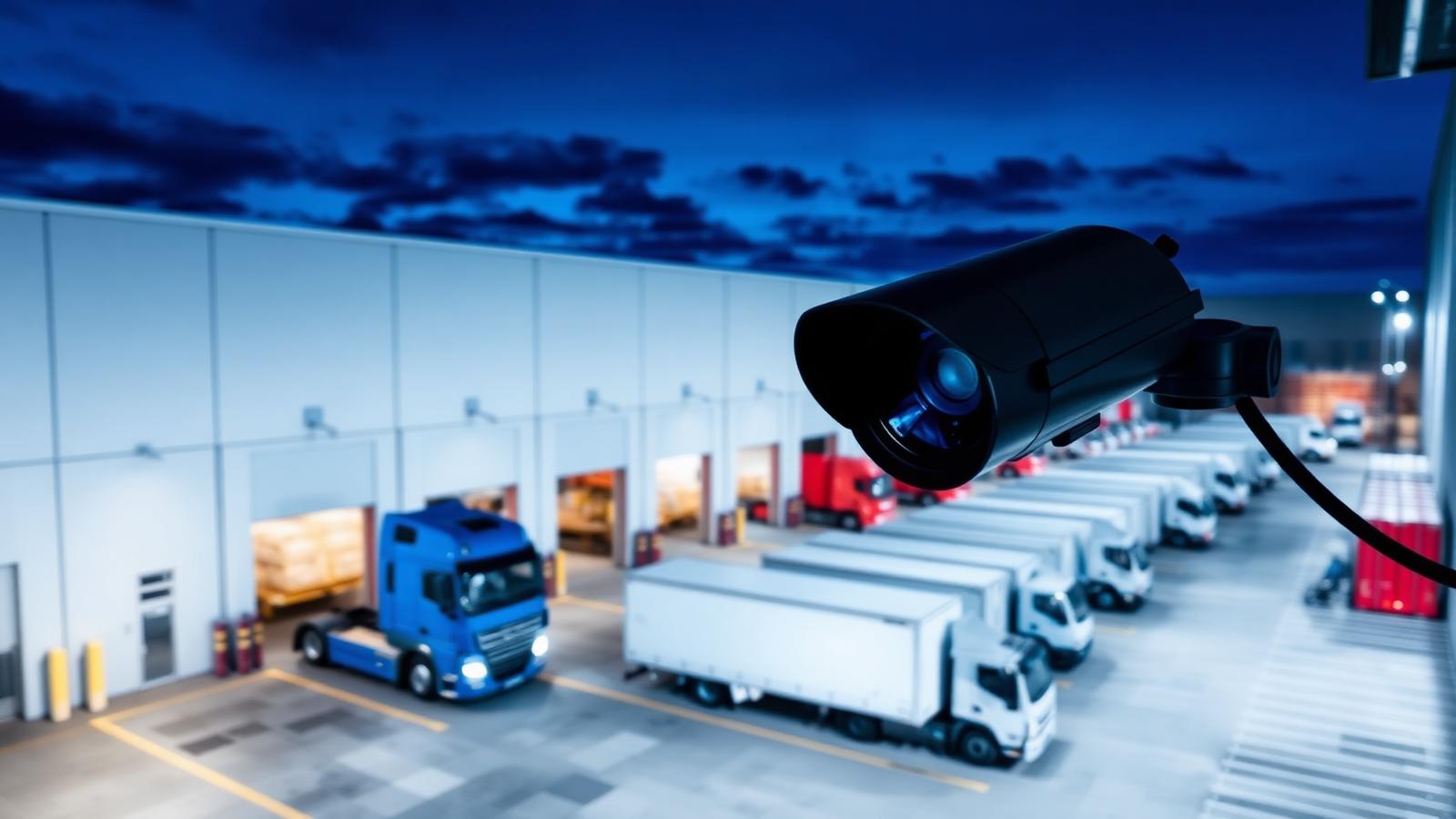
You probably do not need new hardware. Most distribution centres already have cameras covering every dock door for security and claims purposes. Those same streams can produce operational data, and this is how that works in practice.
Why the security cameras are already enough
A dock monitoring system needs to answer four questions: is a trailer at this door, is a truck attached, is anything happening, and when did each of those change. None of those questions require a specialist sensor. They require a consistent view of the doorway and software that watches it without getting bored.
What makes a camera usable
| Requirement | Good | Problematic |
|---|---|---|
| View | Door opening and trailer body both visible | Interior-only or extreme oblique angle |
| Resolution | 1080p or better | Below 720p, or heavily compressed |
| Frame rate | 5 fps or higher | Time-lapse or motion-triggered only |
| Access | RTSP stream from the NVR or camera | Proprietary cloud-only recorder with no stream export |
| Lighting | Consistent, or IR at night | Direct sun into lens at shift change |
If a camera fails one of these, it usually needs repositioning rather than replacing, which is a ladder and an hour rather than a capital request.
What you gain over sensor-based approaches
- No installation at the door. Loop sensors, laser curtains and door contacts each require electrical work on live bays.
- Visual evidence. A timestamp is contestable, a timestamp with the frame that produced it is not. This matters enormously in detention disputes and damage claims.
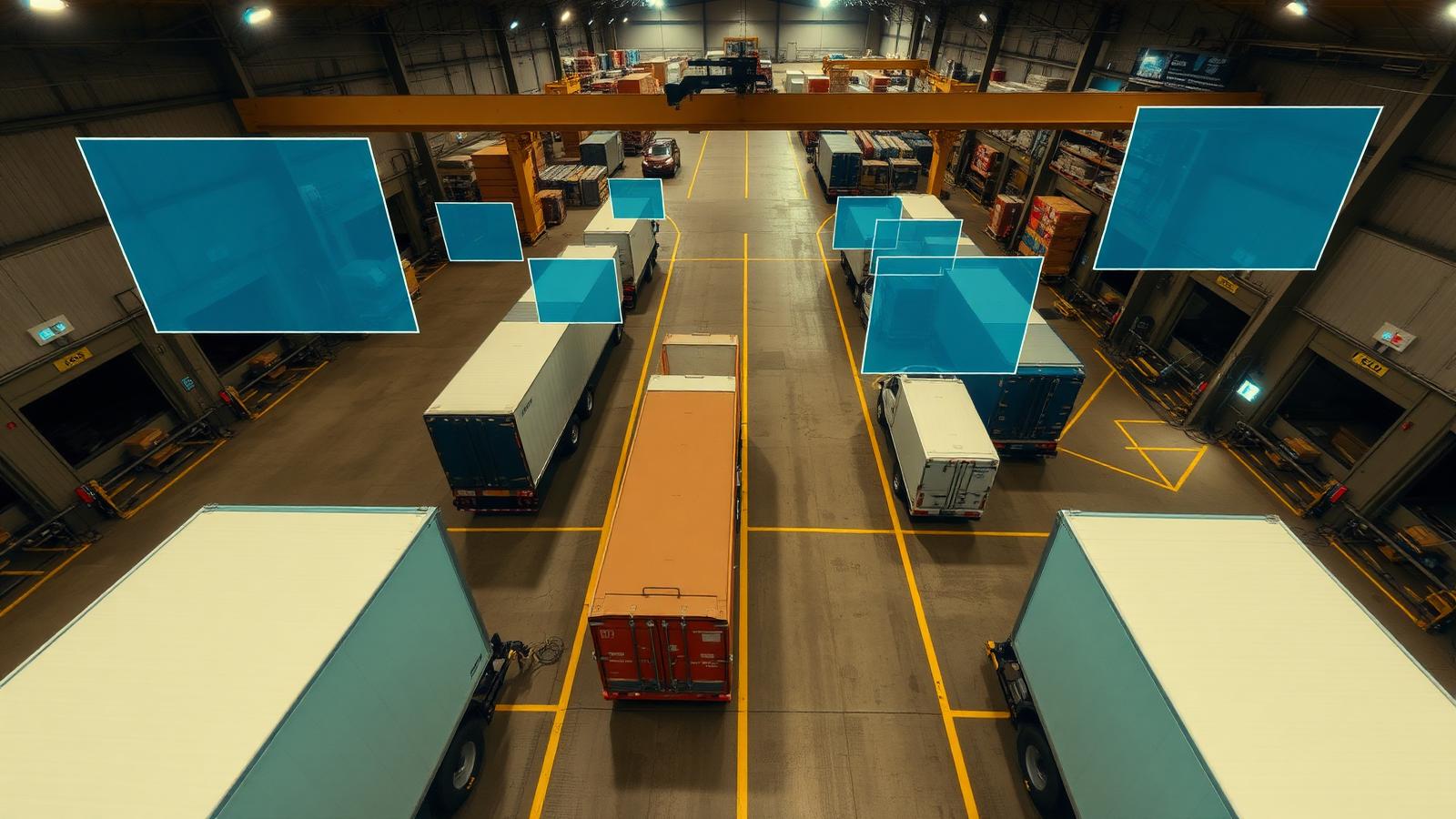
- Reconfigurable. Change how a bay is used and you redraw a zone in a browser rather than remounting hardware.
- Cheaper to scale. Adding a door is a software step, not a purchase order.
The honest trade-offs
- Camera health becomes an operational dependency. If a stream drops, you lose data for that door. A serious system must surface that as an explicit offline state rather than reporting a quiet dock.
- Angles matter more than accuracy claims. A well positioned 1080p camera outperforms a badly positioned 4K one every time.
- Bandwidth and processing need planning. Streams should be processed at the edge or on site, not pushed wholesale to the cloud.
- Privacy policy needs a look. Operational monitoring of vehicles is straightforward, but if people appear in frame, check your existing camera policy covers analytics as well as recording.
Practical first step: walk your dock and pull a still frame from each door camera. If you can tell, from the frame alone, whether a trailer is docked and whether a truck is attached, that camera is a viable data source today.
A camera audit checklist
- One camera per door, or one camera covering no more than two adjacent doors at a workable angle.
- RTSP credentials available and documented.
- Network path from the recorder to a local processing machine.
- Night-time frames checked, not just daytime.
- Known problem bays flagged, for example those facing a west-setting sun.
Key takeaways
- Existing security cameras answer the four questions dock monitoring needs.
- Angle and stream access matter far more than resolution or brand.
- Visual evidence alongside timestamps is the decisive advantage over sensors.
- Insist on explicit camera-offline states, otherwise silence looks like a healthy dock.
How Dockeye uses them
Dockeye connects to your existing RTSP streams, lets you draw trailer and truck zones per door in the browser, and turns the result into live dock states, timers and detention alerts. Cameras are health-monitored continuously, and a door with a dropped stream is clearly marked offline rather than reported as available.